Interview with Harminia: A Visual-Kei Artist’s First Debut
By Jack Sam


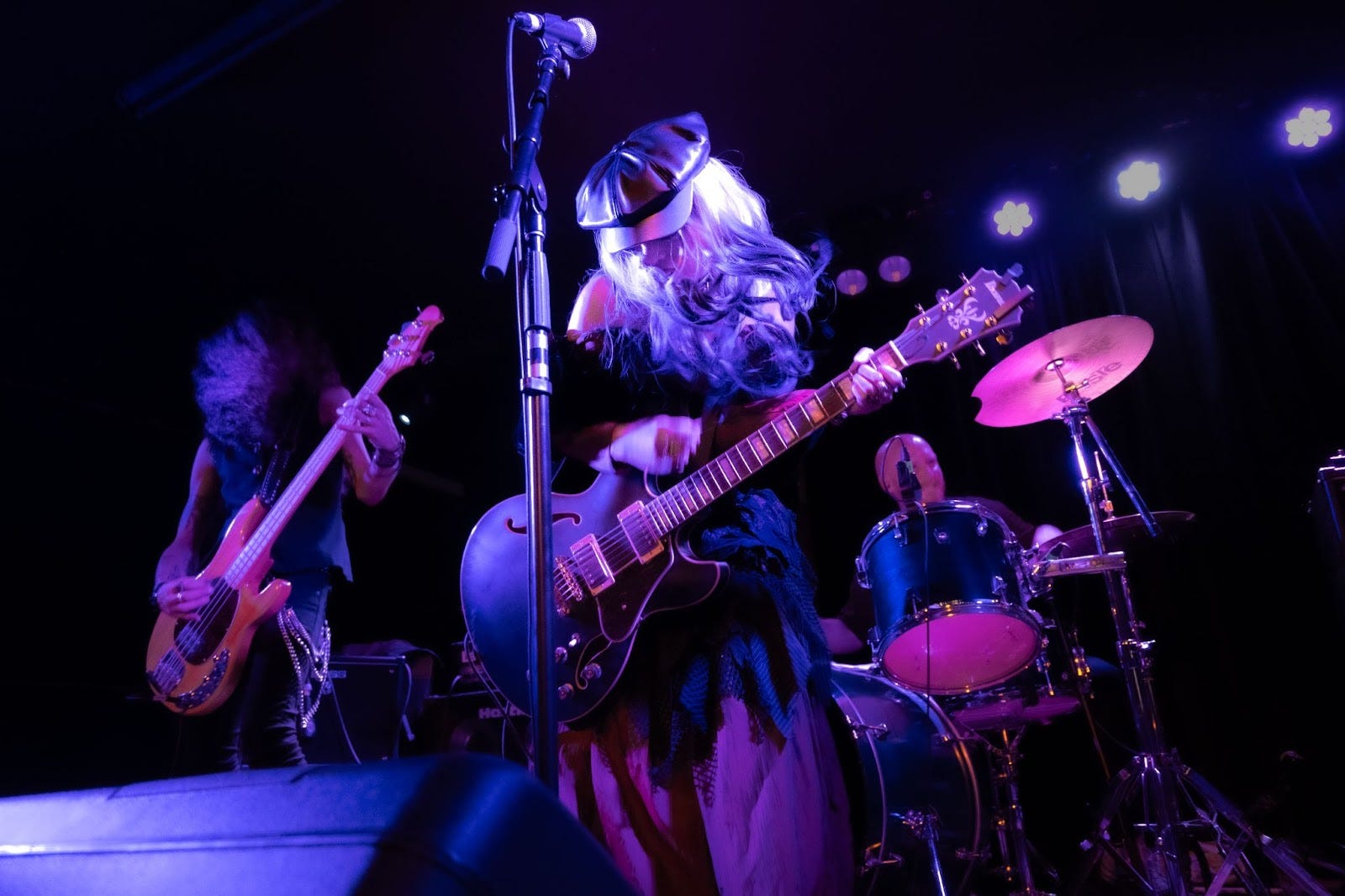
At The Last Chance Bar, there’s a girl screaming at the top of her lungs accompanied by a litany of melancholic guitar melodies. Her lyrical songs resemble a mix of grunge, shoegaze, and dream rock; she dresses like a figure emerging from dark fog in a forest— Harminia is an artist and musician from Naarm, and recently I had the opportunity to interview her about her debut.
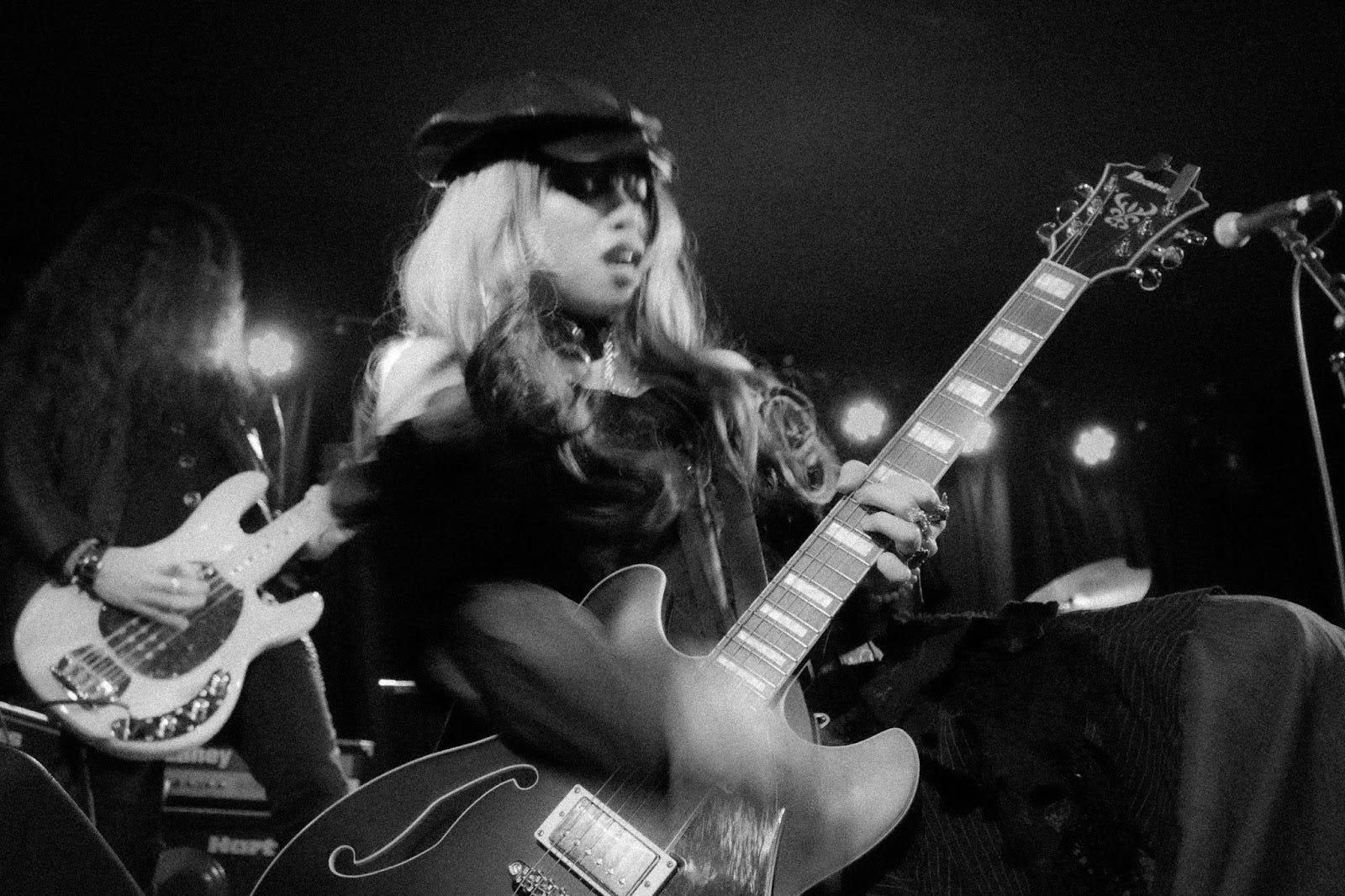
To start off with, let’s discuss your stage name. How did you come up with the name Harminia? Is Harminia an alter-ego that’s separate from your preferred name Sakura?
There’s a book called The Dictionary of Obscure Sorrows which contains a made-up word called “harmonoia” which sounds close to Harminia. According to the book, harmonoia means “a fusion of harmony and paranoia” which I think suits the overall light/dark, dreamy/crestfallen image of Harminia.
Strangely, I have never thought of the two, Sakura and Harminia, as separate things. Anyone could call me by my daily-life name or stage-name and I’d answer all the same.
How do you feel about your first debut? Did it feel different from all of your previous gigs?
It was so chaotic. I have never thought of my songs capable of generating a moshpit! It felt so different onstage. For some reason I felt like I was back in my room, all those years ago, executing the same movements out of a visual-kei music video, having discovered them for the first time. I felt like it was my playground.
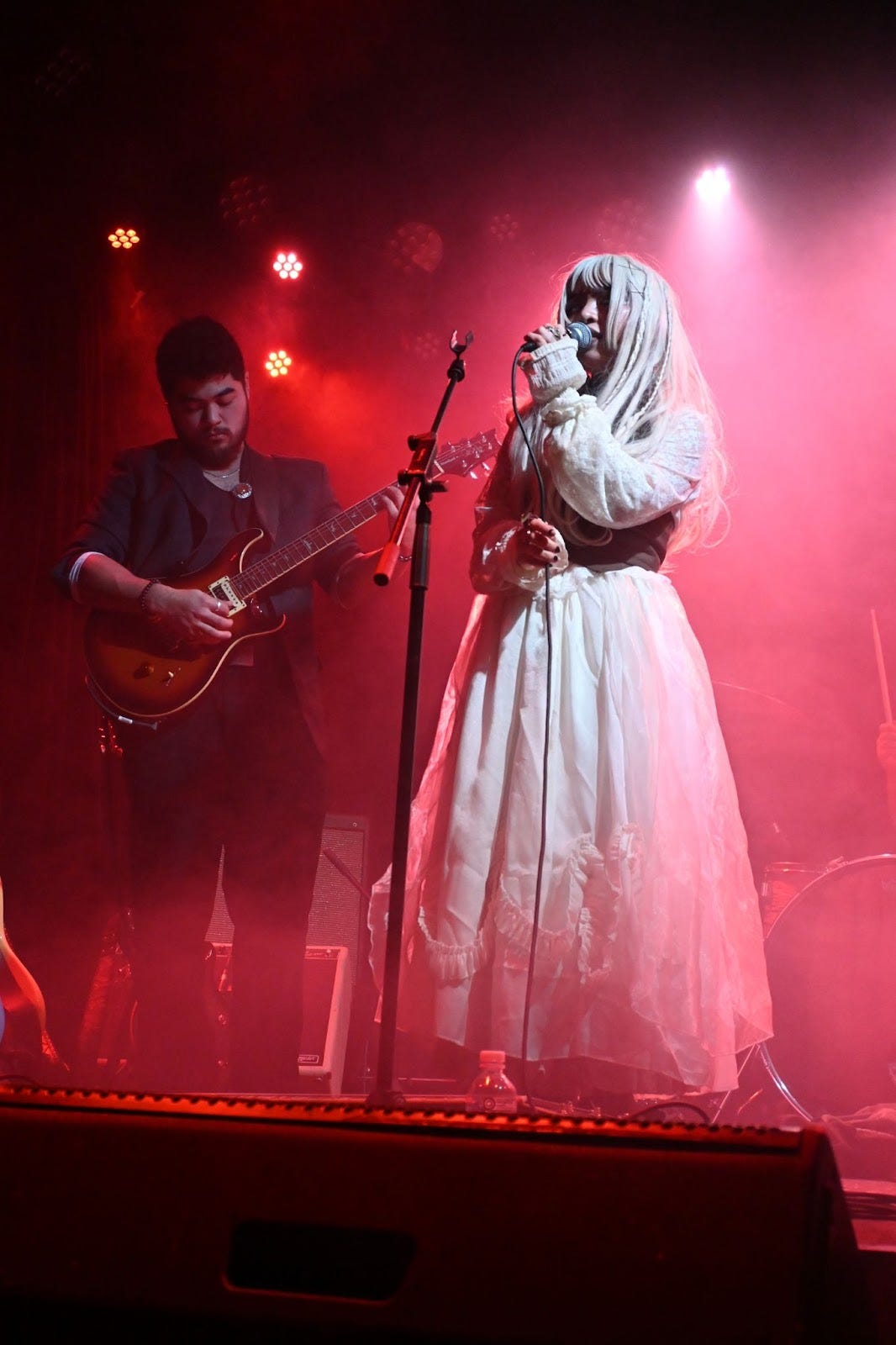
What is your usual writing process like? Where do you take inspiration from?
My songwriting is always melody-based. I start from a random progression or humming and build from there.
For feeling and structure, I look to my greatest influences: Plastic Tree, Radiohead, Nirvana, and for content or story, I look inwards. I usually drag out abstract thoughts, concepts, or memories and dissect them, understanding why I had them in the first place. It’s like forensic work. Journalling is a really helpful tool for me. I’ve written so many songs whose lyrics were once pinned down specimens on a journal entry.
During your gigs, your performance seems integral to your music: you swirl around, reach your hand out to the audience, then suddenly collapse in despair— in other words the music stage becomes your theatre. On stage you are a singer, actress, and guitarist all at once. Why is performance so important to you?
My penchant for theatrics comes from my 14-year-old self who got obsessed with this particular j-rock band called Versailles. Their whole concept was so over-the-top and theatrical and storyline-based but at the same time they were masters at their instruments, making heavy metal and rock ballads— the thought of those two contrasting concepts fusing together had bewildered the young me. I vividly remember thinking, as I watched their lead guitarist once upon a music video, “I never thought the guitar could be played so gracefully” and after that, I exposed myself to the culture of visual-kei, and noticed they were always moving too much, expressing too much, wearing too much that I looked up to them and developed a dislike for ever standing still onstage.
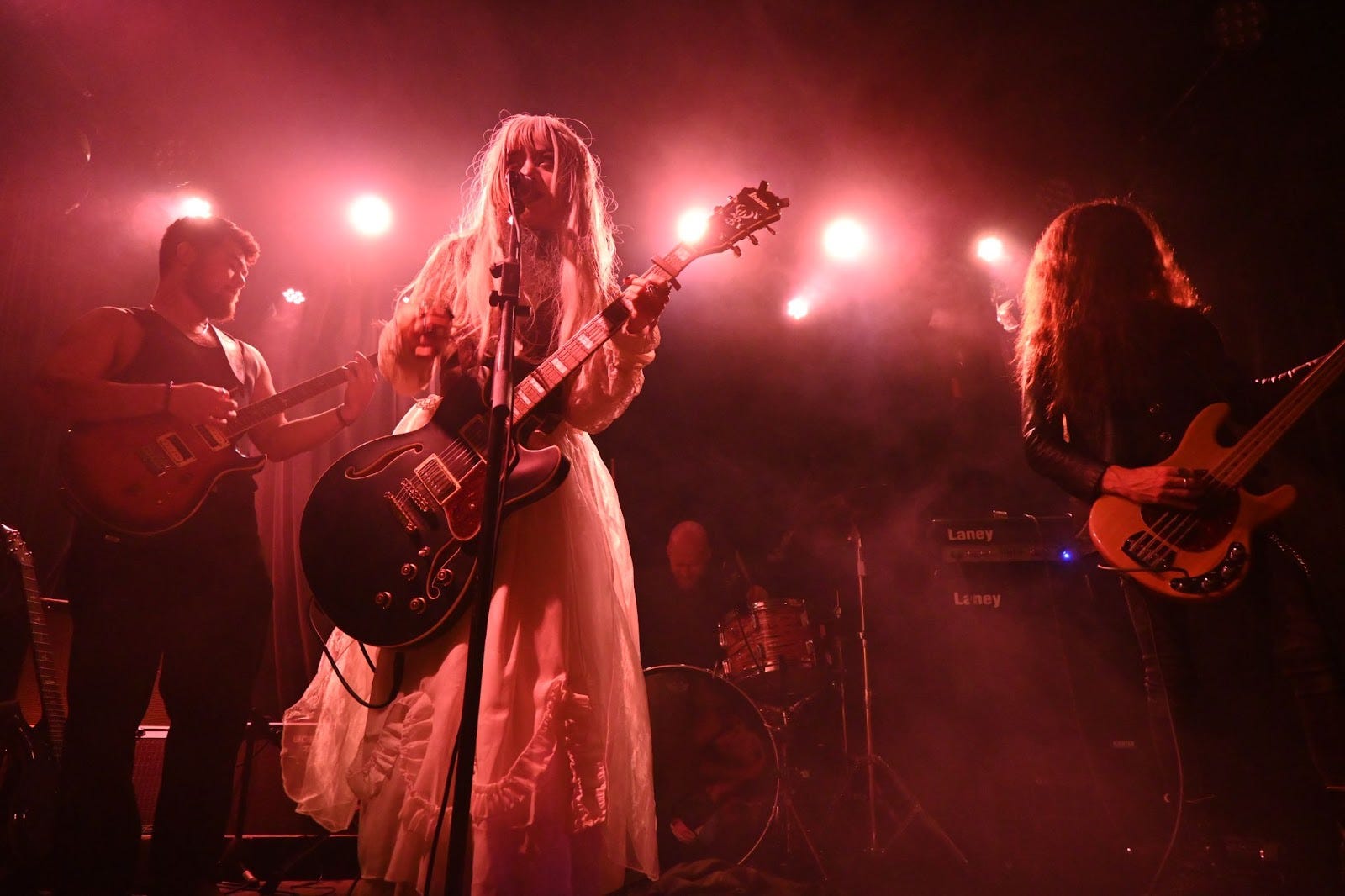
What are some difficulties that you face as an artist and musician? As a fellow writer I’d assume that you face writer’s block at times, and on top of that you’d need to coordinate band practice times, social media posts, etc….
Fortunately, I have been called a well of infinite songs, which I take proudly. As of now, there is never the problem of not enough, but rather, too much material. I have songs sitting around gathering dust and ideas swimming in my head that the real problem I face becomes, how the hell am I going to release all this? Who’s funding all of this? Apart from the great wall of recording and releasing there is little my band cannot do creatively. I like how we come from different artistic roots that often highlights and contrasts our nuances. Aside from that, we see the rehearsals as some sort of catharsis, seeing each other once a week. Being in a room, drowning in your own sound could be really beautiful and euphoric. And I manage the social media side of Harminia— most of it is really just an excuse for a creative medium.
On social media I see posts with captions such as “lovecraftian dreamgrunge porcelain doll” or “my visual-kei heroine arc”. It seems that you’ve created your own unique aesthetic which is inseparable from your music identity. Can you tell us more about your overall aesthetic?
It was my greatest childhood dream but I’ve never consciously decided I’d fuse 90s alt-rock with my love for Visual Kei. It happened organically. If I could pinpoint it, I’d say it’s the chimera of Hizaki from Versailles, Lolita and Grunge fashion styles, and Ryutaro from Plastic Tree— I like things that are flowy, layered, and eye-catching onstage. I tend to project a wistful but grungy image. I’d say a good rule of thumb is I want to look like the show.
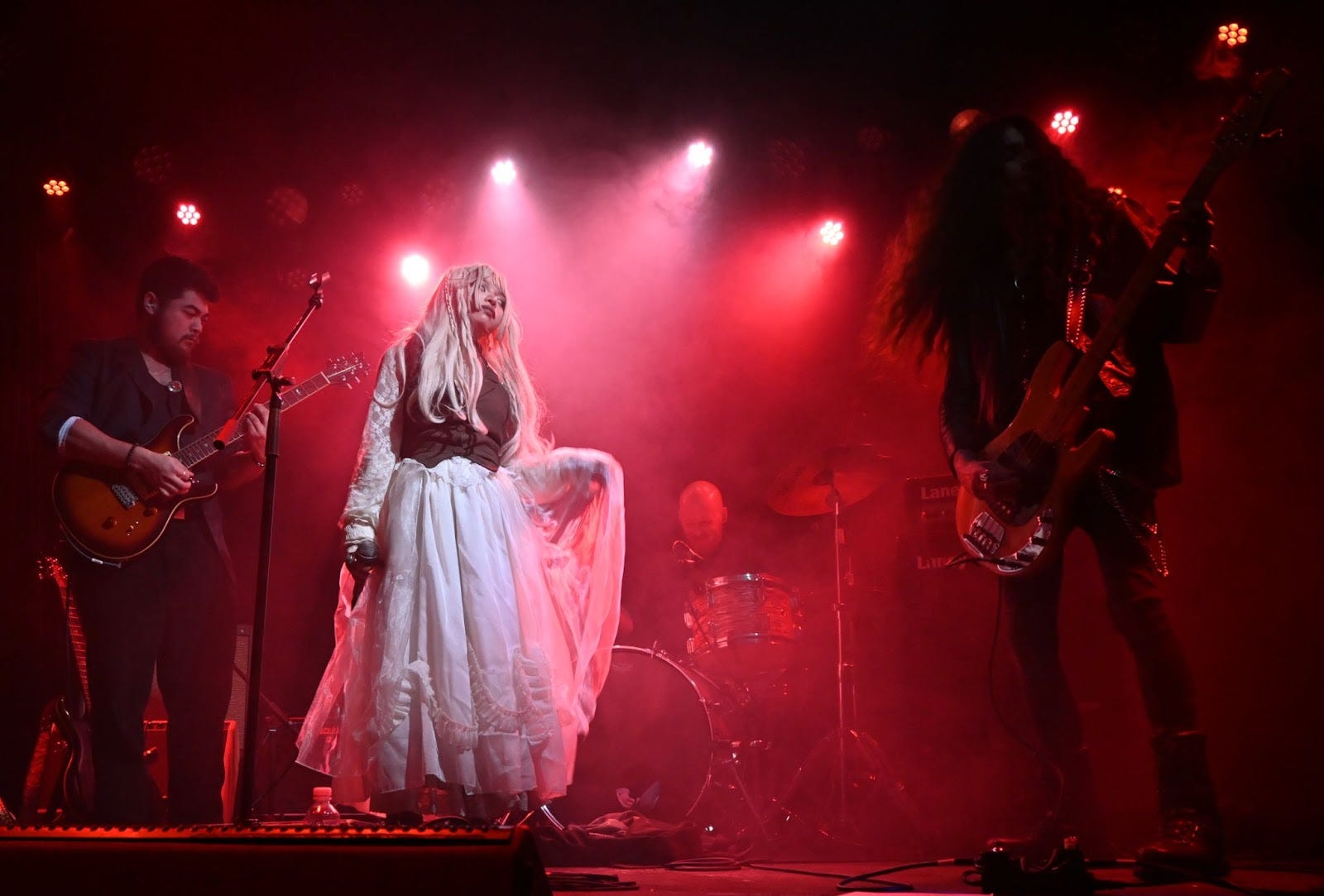
Your songs usually announce an apocalyptic atmosphere, as if the audience is suddenly transported in a world where lost and violent love lingers indefinitely. I’m thinking of songs such as osteotomy (“lacerate, and pick up all my sorrows // pick it up, reconstruct all of me”) or nacl (“he’s taken me away”). Can you talk more about the lyrics in your songs?
My songs do carry the weight of melancholia, always. I see my lyrics as the most distilled version of my feelings. As I said to someone before, they’re like the purest form of anything I could ever say to you. I tend to be obsessive in sharply, explicitly, even vulgarly articulating my emotions, which results in a lot of my lyrical imagery being so vivid and raw. I just want to write honestly. I want to explore and peel back all the words. I write as a way of immortalising things. I want to capture them. And make them tangible. To leave something behind as proof that it happened. In that same vein, I think that’s why I tend to overly articulate things, because I want to catch them in that specific state, unchangeable, undiluted, as I saw it, as I felt it—so I could experience it again, like a small time machine.
 | A guest post by
|